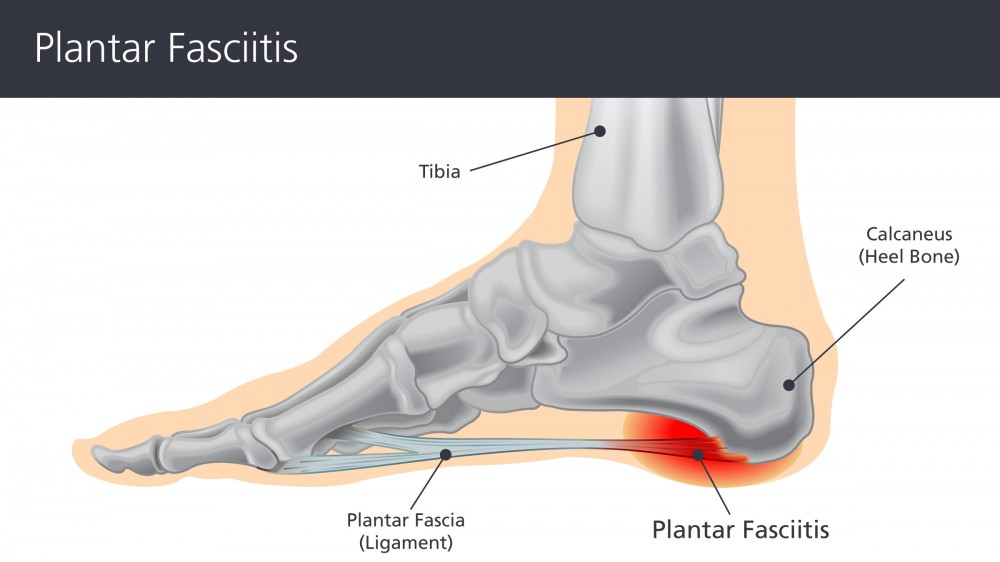
Plantar fasciitis is one of the most common causes of heel pain, affecting people across a wide range of ages and activity levels. It involves the plantar fascia, a band of tissue running along the sole of the foot from the heel to the toes. While many cases settle with conservative care, some prove more stubborn, and understanding the condition helps in discussing options with a specialist.
What Causes Plantar Fasciitis?
The condition is generally associated with strain and irritation where the plantar fascia attaches to the heel. Contributing factors can include changes in activity levels, footwear, foot structure and time spent standing. It is described in the literature as a common and disabling condition that can be resistant to treatment in some cases (Boyle & Slater, 2003).
Recognising the Symptoms
The most familiar symptom is heel pain that is often at its worst with the first steps in the morning or after a period of rest. Pain may ease with gentle movement and then return after prolonged standing or walking. Because heel pain can have several different causes, an accurate assessment is important rather than assuming the diagnosis.
Conservative Management
Initial management is typically non-surgical and may involve activity modification, stretching, footwear changes, orthoses and other measures guided by a practitioner. Many people improve with these approaches over time. Where symptoms persist despite an appropriate period of conservative care, further options may be discussed.
When Surgical Options Are Considered
For cases that remain recalcitrant to conservative treatment, surgical release of part of the plantar fascia has been described, including endoscopic techniques that have received attention as an alternative to established open procedures (Boyle & Slater, 2003). As with any procedure, suitability depends on individual assessment, and potential risks and benefits should be discussed in detail beforehand.
Conclusion
Plantar fasciitis is a common source of heel pain that often responds to conservative care, though some cases require further discussion. Anyone experiencing persistent heel pain should seek assessment from a qualified practitioner, who can advise on the approach best suited to their circumstances.
References
- Boyle, R. A., & Slater, G. L. (2003). Endoscopic plantar fascia release: A case series. Foot & Ankle International. DOI: 10.1177/107110070302400213
Disclaimer: This blog is for informational purposes only and should not be considered medical advice. Please consult with your healthcare provider for any questions or concerns regarding your health. All surgical or invasive procedures involve potential risks. It is advisable to seek a second opinion from a suitably qualified healthcare professional before making any decisions.


