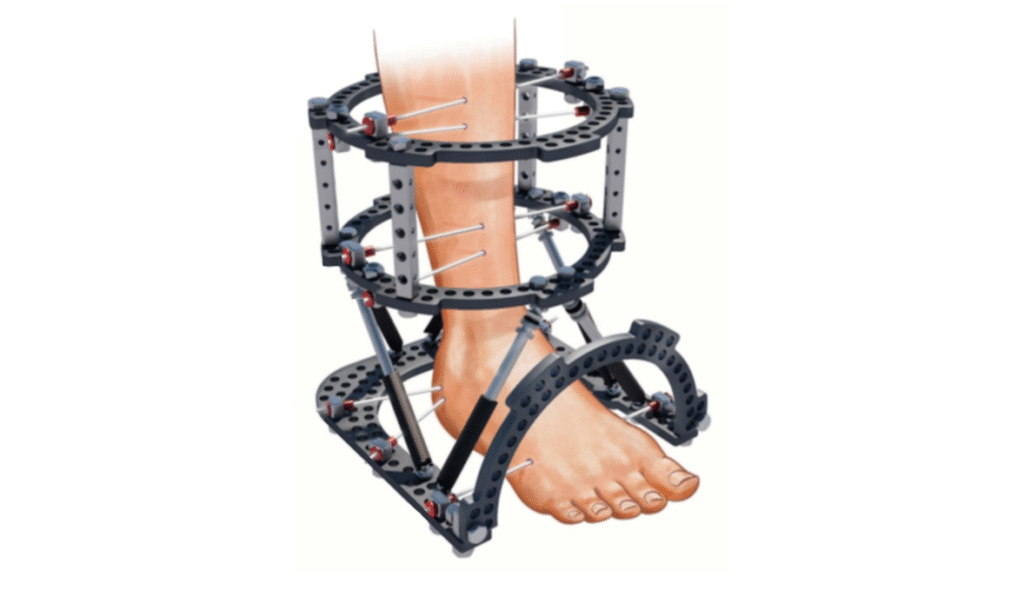
Charcot neuroarthropathy is a serious complication often associated with diabetes and peripheral neuropathy. It leads to progressive joint destruction, deformity, instability, and increased risk of ulceration or infection in the foot and ankle. When conservative measures such as offloading, bracing, or casting fail, surgical intervention may be considered for limb salvage. Circular external fixation frames, such as Ilizarov or Taylor Spatial Frames, play a valuable role in these complex reconstructions.
Role of Circular Frames in Charcot Reconstruction
Circular frames provide multiplanar stability, allow gradual deformity correction, and facilitate compression or distraction at fusion sites. In Charcot cases involving the midfoot, hindfoot, or ankle, they help realign the foot, stabilise bony fragments, and protect soft tissues during healing. The frame is typically applied after debridement of infected or necrotic tissue and may incorporate internal fixation where appropriate. Treatment duration often spans several months, with careful pin-site care and regular follow-up essential to monitor progress and manage complications.
This approach is particularly useful in patients with poor bone quality, active deformity, or when internal fixation alone may be insufficient. Hexapod systems enable precise computer-assisted adjustments for complex corrections. The goal is to achieve a stable, plantigrade foot that allows weight-bearing in appropriate footwear and reduces ulceration risk, thereby supporting limb preservation.
Considerations and Outcomes
Success depends on careful patient selection, control of underlying medical conditions (e.g., glycaemic management), and a multidisciplinary team including vascular surgeons, infectious disease specialists, and podiatrists. Potential challenges include pin-tract infections, stiffness, delayed union, or the need for further surgery. Not all patients are suitable candidates, and amputation remains an option in severe, non-reconstructible cases.
Current literature supports the use of circular frames in select Charcot reconstructions, with reported improvements in alignment and function in experienced hands. However, high-level evidence from large randomised trials is limited, and individual outcomes vary.
Circular frame techniques represent one tool in the armamentarium for managing advanced Charcot neuroarthropathy. Patients should discuss risks, benefits, and alternatives with a qualified foot and ankle specialist. Early intervention and ongoing preventive care remain critical in diabetic foot management.
References
- Martin, B., & Chow, J. (2021). The use of circular frame external fixation in the treatment of ankle/hindfoot Charcot Neuroarthropathy. Journal of clinical orthopaedics and trauma, 16, 269–276. https://doi.org/10.1016/j.jcot.2021.02.016
- Lahoti, O., Chandrakumar, C., & Kavarthapu, V. (2026). Circular Frame Strategies for Ankle and Hindfoot Charcot Reconstruction. Foot and ankle clinics, 31(2), 219–235. https://doi.org/10.1016/j.fcl.2024.08.009
Disclaimer: This article is for general educational purposes only and does not constitute medical advice. Treatment decisions must be made in consultation with a registered health practitioner following thorough assessment. Regulatory bodies such as AHPRA and the TGA oversee safe clinical practice in Australia.


